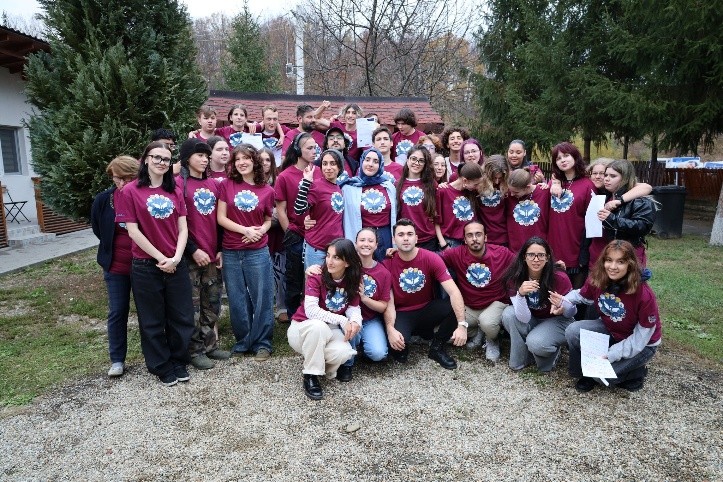
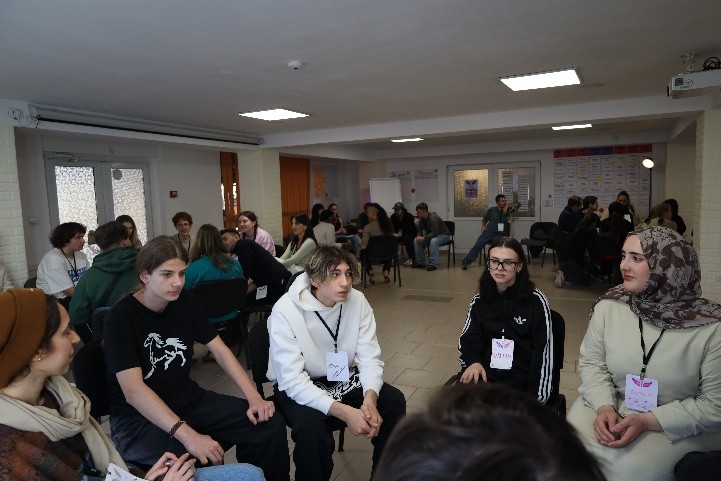
The youth exchange “Digital Youth for Active and Inclusive Societies” was the first activity implemented under our Erasmus+ 2025 accreditation and was carried out over a period of seven days (01.11.2025–10.11.2025) at La Pădure Guesthouse in Brebu, Caraș-Severin County. The activity brought together 44 participants from six European countries—Czech Republic, Poland, Hungary, France, Turkey, and Romania—creating a supportive environment for intercultural learning and active collaboration.
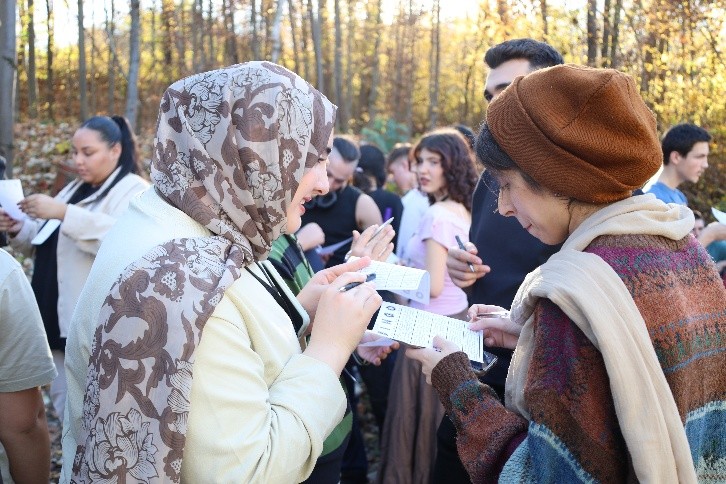
The youth exchange provided an international learning experience focused on personal development, confidence-building, and the acquisition of life skills through workshops, discussions, and cultural exchange on themes related to inclusion and active citizenship. The first day laid the foundation through getting-to-know-each-other activities and team-building exercises. The following days included five learning stations on Erasmus+ concepts, experiential activities (such as raft flipping, LARP, and “walk-and-talk” discussions), and thematic sessions facilitated by the national teams addressing stereotypes, self-awareness, media literacy, and personal well-being. Participants also worked on developing “Small, Local, Sustainable” action plans.
The national cultural evenings celebrated diversity and strengthened intercultural connections, while the final day was dedicated to reflection, evaluation, and the Youthpass ceremony. During this ceremony, participants received certificates recognising their acquired competences, along with personalised materials (stickers and T-shirts), encouraging them to become more engaged and responsible members of their local and European communities.
Objectives
-
Raising young people’s awareness of their role as active citizens by exploring democratic values, human rights, and the importance of participation within their communities.
-
Encouraging meaningful youth engagement in civic life through interactive activities that strengthen self-confidence, critical thinking, and motivation to become involved in local and international initiatives.
-
Promoting intercultural dialogue and cooperation among participants from diverse backgrounds in order to foster mutual understanding, tolerance, and shared responsibility in building inclusive societies.
Disclaimer
This communication only reflects the point of view of the author and European Commission cannot be held responsible of the information provided.